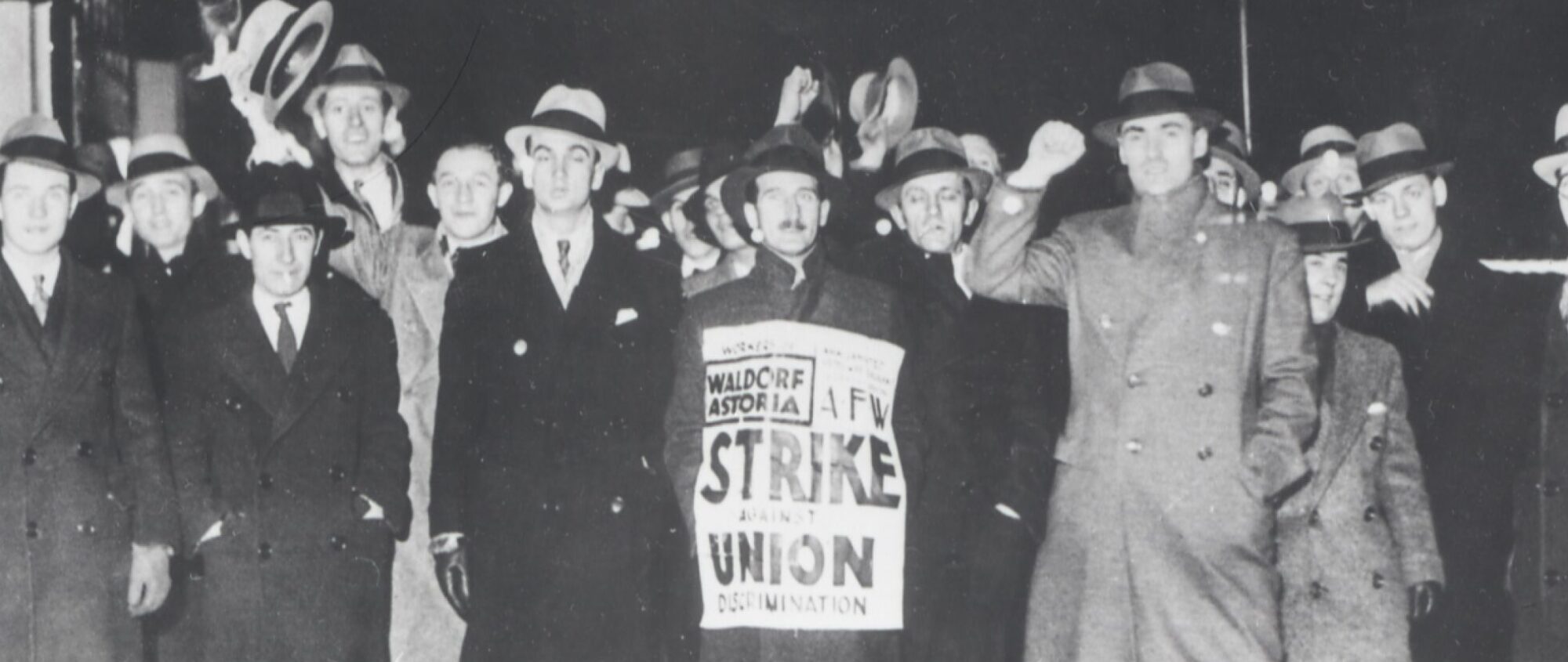
Pirates of the New Economy
Skylar Deleon should have waited five years. The former child actor (he was a bit player on “The Mighty Morphin Power Rangers,” not, alas, an actual Power Ranger) was sentenced to die by lethal injection for the murder of Thomas and Jackie Hawks. In November of 2004, Deleon responded to an advertisement that the Hawks had posted to sell their yacht, the Well Deserved (and, no, I’m not making this up), and joined them for a test drive (or whatever the nautical equivalent of a test drive is). When they got out into the ocean Deleon forced the Hawks to sign over the title to the yacht, tied the couple to an anchor and dropped them to the bottom of the ocean.
Deleon planned to get away from his financial problems and sail to Mexico. Apparently, after the “Power Rangers,” Deleon had a Forest Gump-like knack for stumbling through the cultural zeitgeist and swindled a living as a mortgage broker and “entrepreneur.” Today, a lot of us have financial problems, and owning a yacht is a luxury that people seem all-too-willing to walk away from. According to the NY Times, as boat owners face difficulty making payments on loans and dock slips, many owners are simply unmooring their boats and letting them float out to sea. These abandoned boats are an environmental hazard, and localities are rushing to pass laws to outlaw the abandonment of a sea vessel.
Florida officials say they are moving more aggressively to track down owners and are also starting to unclog the local inlets, harbors, swamps and rivers. The state appropriated funds to remove 118 derelicts this summer, up from only a handful last year.
In South Carolina, four government investigators started canvassing the state’s waterways in January. They quickly identified 150 likely derelicts.
[snip]
Crab Bank, a protected bird rookery in the harbor within sight of Fort Sumter, is home to a dozen derelicts — two sunken, two beached, the other eight still afloat. They range from houseboats to a two-masted sailboat.
It’s not hard to see where this trend will end up: Piracy! I’m only half-kidding. If a two-bit punk like Skylar Deleon could resort to double homicide and theft to realize a fantasy of sailing away to Mexico to continue a career of pettier larceny and confidence schemes during a relatively decent economy, what we’ve got now is a whole lot more desperate unemployed people out there, a small flotilla of houseboats, yachts and speedboats and the compelling example of the very successful Somali pirates.
I’m almost tempted to spit on my hands and hoist the black flag, myself. Of course, as a pacifist, I need to tweak the Somali model of piracy. Perhaps I could sail alongside civilian yachts, climb aboard, look really menacing and then announce that I have Snickers bars for sale “not to raise money for my basketball team or my school, but to put money in my pocket and keep me out of trouble.”
Developmental Diversity
My hometown’s getting a bit of a black eye from the NY Times this weekend. On Friday, the Grey Lady published a profile of Bellerose (a few blocks from my Floral Park and “across the street from Nassau County,” take note), where our local drive-in Frozen Cup ice cream shop is being bulldozed to make way for a new sex hotel.
This is one of many changes, notes Times scribe James Angelos:
The closing of the beloved neighborhood spot strikes many residents as simply the latest sign of the death of old Bellerose. The bowling alley, another local hangout that some considered the beating heart of Bellerose, closed a few years back, to eventually be replaced by a Staples, among other stores. Several years ago, the nearby movie theater closed, and the building now houses a martial arts supply business.
I played in a youth league at the Bellerose Lanes, mind you. My dad worked a part-time job there. I was sorry to see it go, if only because it’s damn hard to find a decent bowling alley in New York these days. Around the same time, two bowling alleys near my old Kew Gardens home also closed down, muscled out by new developers who will likely also replace them with hotels or office supply stores. And when I moved in to Bay Ridge, it was hot on the heels of a protest over the shuttering of the local Key Food grocery store to be replaced by – wait for it – a Waldgreens drug store, while the nearest supermarket, Coney Island’s Pathmark, is swamped with shoppers from four under-served adjacent neighborhoods. It’s all just capitalist development, no? Another example of Jane Jacobs’ theory of success driving out success when it comes to real estate development, leading to numbing homogeneity and the “death of great cities?”
But the Times smells something else at play. At that something else is the faint whiff of curry:
“They’re turning the neighborhood into a third-world country,” Mr. Augugliaro said. “We don’t want it over here to look like Richmond Hill or Jackson Heights,” he added, speaking of Queens neighborhoods with sizable South Asian populations.
As he spoke, Ms. Augugliaro shook her head in disapproval at some of his remarks, and he seemed to pick up on her unspoken criticism.
“I’m not a racist,” Mr. Augugliaro quickly added. In fact, he said, he was tired of the subject of race coming up so often. “What does race have to do with it?” he asked.
Indeed. What does race have to do with it? I have a strange sort of pride that the neighborhood I grew up in is now New York’s Little India; that slumming yuppies make pilgrimages to Floral Park to sample the vindaloo (pity my bland palate can’t handle the stuff); that my parents’ home has quintupled in value, and when they cease to live there, it will be painted purple and adorned with brushed nickel metal accents.
Others, like Mr. Augugliaro (whose name sounds familiar; I think he volunteers for the same community theater group as my folks), are threatened that the changes to the neighborhood look and talk different from the Irish and Italian stock that formerly constituted northeast Queens. But they are letting The Man pit us against each other. The problem is not that another generation of immigrants are pulling themselves up by the boot-straps, buying in to the community and adding a taste of curry to the proverbial melting pot. The problem is that land, and usage, and community service are for sale to the highest bidder, and that local real estate desperately needs some limits and controls placed on it, to ensure a continued diversity of use and community, and that the endless sea of Wal-Marts, Walgreens, Applebees and Home Depots are still dotted with the occasional bowling alley and ice cream shop so that our neighborhoods remain communities.
A Real Hat
After a morning that saw me put a bid in on a spacious two bedroom apartment with a formal dining room in Bay Ridge – $10,000 down with 75% financing and a very adult activity, if ever I engaged in one – I decided to go shopping for a new hat. I’ve been wearing hats for a little over a year now: a straw hat followed by a light felt black fedora. Fashionable as it might otherwise be, a black hat clashes with the navy blazer I’ve taken to wearing lately. This is another dubious sign of maturity. As the Clash song goes, “You grow up and you calm down / You start wearing blue and brown.” A grey hat seemed in order, so I made my way to Bencraft Hatters.
Bencraft has two locations in Brooklyn. The original is located in Williamsburg, not far from where my paternal grandfather lived when he married my grandmother. It’s probably where he purchased (or, more likely, rented) the top hat he wore on their wedding day. The other, which I frequent, is in Borough Park. Inside of Bencraft, you will find the kind of intense debates, measurements and arguments over hats that made most American men heave a sigh of relief when J.F.K. attended his inauguration bare-headed. Being a Sunday, I found a dozen Jewish men (customers and salesmen) engaging in heated debates over coloring, brim size and the ever-ephemeral quality of “quality.”
A family – two older brothers and their father – fretted over the difference of a quarter of an inch of brim for the youngest of their clan. A 10-year-old girl rejected her father’s new hat as “not as good” as his last one, and chastised him for losing his yarmulke inside of a display hat and thus exposing his chrome dome to Yahweh. At the sales counter, an agitated little man complained of a barely detectable “bump” in the crown of his new hat. “I wouldn’t complain, except that this is the fourth hat I purchased from you this week,” he explained. The salesman countered, “In every hat in this store, could I find an imperfection? These are handmade hats, they will never be 100%” Finally, though, the salesman agreed to steam the hat in an attempt to work out the bump, although, he complained, Sunday was a bad day for it. He gestured to the long line of Hassidic men waiting to have their hats steamed and cleaned.
As for me, I meekly requested a grey hat in the same cheapo style as the “lite felt” fedora I was already wearing. None in my size, the salesman apologized. He did find a slightly-more-expensive Stefano. “It’s a real hat,” he explained, “as we say in the business.” Almost thirty, a real home and a real hat. How could I refuse?
This Message Is Very Plain: I h8 ur txt msg
Writing in the Sunday Times, Megan Hustad laments the cultural decline of “the office phone call.” People prefer to use e-mail for petty confrontations and negotiations, and valuable diplomatic skills are lost and new employees lose the informal training that comes with eavesdropping on the boss. In my new fancy-pants position with my union, I’ve noticed that my phone calls to people at headquarters frequently go to voicemail, and that the responses come back via Blackberry.
This seems to be a weekend for hand-wringing and tut-tutting over the technological devolution of our social interactions. Elsewhere in the Times, Laura Holson notices that these kids today sure do like to send text messages, creating some kind of generation gap. Apparently. Meanwhile on livejournal (itself, a weird barrier to normal social interaction) a friend of mine protests the suddenly rigid tradition of getting into and out of relationships on Myspace, complete with the formal change of relationship status from “Single” to “In a Relationship” (or vice versa), a reshuffle of one’s “top friends” and gooey comments added or deleted from each other’s profiles. Funnily enough, another friend popped back up on Myspace this weekend after deleting her account some weeks ago. Her relationship status, I took note because this is the reason that we are on the Myspace to begin with, had changed to “Single.” Is this now a way of responding to a break-up? New hairdo, new city, new Myspace profile?
I’ve been listening to old Replacements records this weekend, after reading Jim Walsh’s spotty but genuinely exuberant book about the 80’s indie icons. Paul Westerberg has always been a preternaturally grumpy old man (one of the reasons I’ve always liked him) and he’s been complaining about the distance that technology puts between us since tape-recorded answering machine messages. On a beautiful, daring and angry love song that closes out a record full of them (1984’s “Let it Be”), Westerberg, accompanied only by his electric guitar, complains “How do you say I’m lonely to an answering machine?” The song ends with the flat declaration, “I HATE your answering machine,” and a fade-out refrain of “313, 212.” Those two numbers used to signify Detroit and New York City, but soon they won’t mean much of anything as “area” codes are allowed to roam the country along with the person who totes them around in a cellphone – another kind of virtual identity.
It’s a safe bet that Westerberg, if he’s paying attention, finds flirting on a Facebook wall or announcing a divorce via text message to be even more ridiculous than “I’m not here right now…” Still, it’s hard to imagine any songwriter finding pathos in being dropped from someone’s “top friends,” or sending a come-on that can’t help but read like a booty call via text message. I h8 ur txt msg? No thanks.