Baseball and Hardball
I saw my first Mets game of the season, a terrific 9 to 2 bludgeoning of the Reds. “Value” tickets for last night’s game were just $5 for the nosebleed seats in the upper decks. For $5, one can’t really complain. Actually, I rather prefer it way up there. All the games that I saw as a kid were in the upper decks, so that’s how I learned to follow the ball in play. Those box seats behind home plate are just a little overwhelming.
The Mets have a pretty good team this year. They actually win as often as they lose. All I ask is for a little excitement and suspense.
The next two nights are also “value” days, and tickets will be the same price. Tickets will obviously be much more expensive when the Yankees visit this weekend. “Value” days return on May 31 when the Mets face the Diamondbacks. I recommend organizing group outings for a nice day at the ballpark.
This is a rushed post because I am heading out the door to do some more leafletting at the Staten Island ferry. It’s on the Manhattan side this time, as it is all Tuesdays in May, from 4:00pm until 6:00pm. And, once again, leafletting on Thursdays is on the Staten Island side from 4:00pm until 6:00pm.
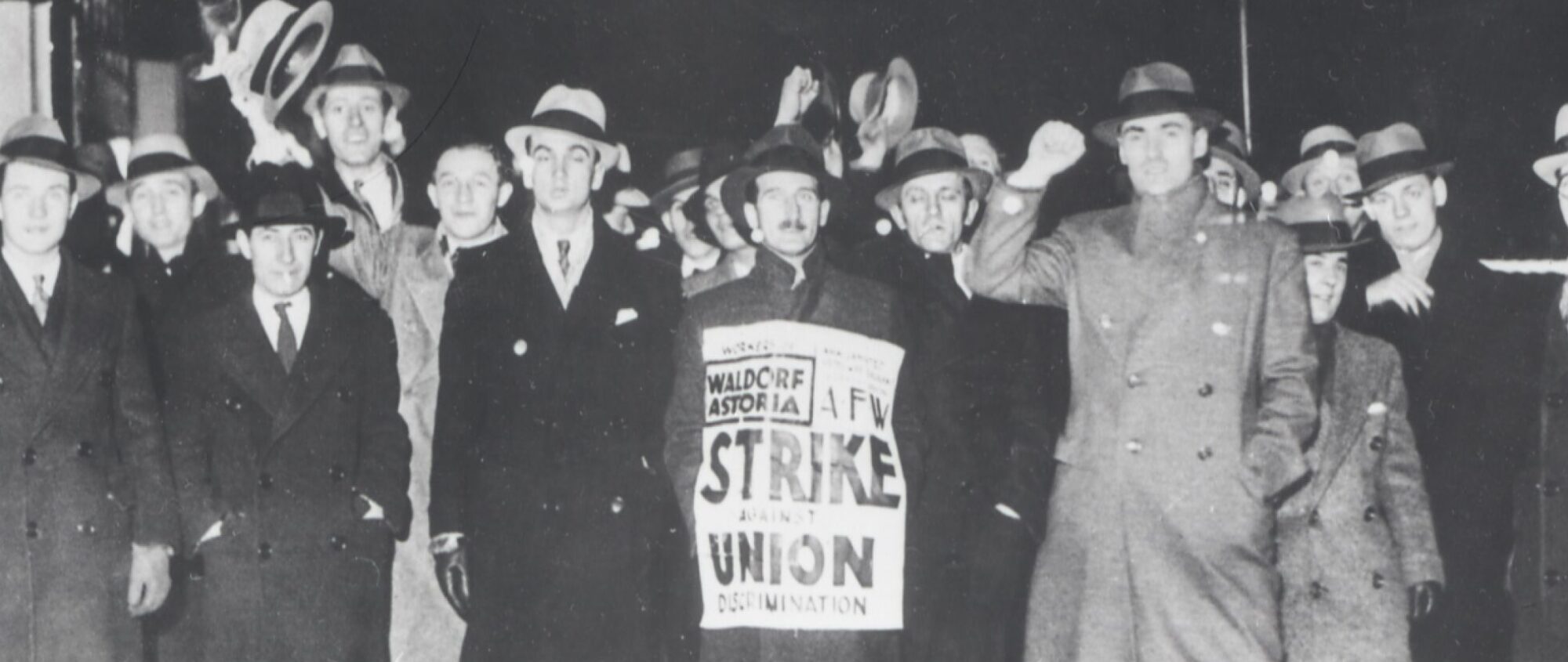
Finally, on Wednesday, the Writers Guild will be stepping up their public campaign against CBS, outside of Carnegie Hall, where the network is unveiling its new shows for the Fall, from 2:30 until 4:30.
From my friend Marija Kowalski:
Dear Union Brothers and Sisters,We are in a tough contract battle with CBS/ Viacom for 430 employees at CBS News. The affected employees are news and promotion writers, editors, graphic artists, desk and production assistants, and researchers. The company is trying to take many jobs out of the union. This would impact many members who’ve been in the union for decades. The company also wants substantial paycuts (up to 21%), to have automatic elimination of our contract in the case of any mergers, and allow managers to do unlimited amounts of work historically covered by our contract, to practically eliminate seniority protection from layoff, and many other outrageous attacks on our union.
As you know, Viacom is one of the five largest media conglomerates in the nation. We are counting on the support of our fellow union brothers and sisters to help us defend our contract against this giant corporation.
We have two events coming up– one tomorrow, and one next week. We realize it is a lot to ask. We would be very appreciative if even one person from your union came to the action tomorrow (an email about that event was sent out last week) and a larger group of people would come to the rally outside the Shareholder meeting. I would also love to hear from you to get an idea of the turnout. I would also appreciate if you would distribute this email to your lists.
Thank you very much!!
Taking On Viacom: WGAE at Viacom Stockholders Meeting Thursday, May 26 / 1:30 p.m.Join the WGAE on Thursday, May 26th as we tell Viacom that we will not sit quietly as CBS demands pay cuts from writers in order to line the pockets of its top three executives with over 150 million dollars.
All owners of Viacom A and Viacom B stock are entitled to attend and participate in their Annual Stockholders meeting. The Writers Guild of America, East will be there too, inside and outside, demanding that CBS withdraw its regressive demands for pay cuts and the removal of union jobs, and instead start working with us to negotiate a fair contract.
Marriott Marquis
Broadway @ 45th Street
New York CityWe are delighted to announce the New York City Labor Chorus will be performing at this rally.
We hope you will join us!
Working Harder for Les: WGAE Rally Out Front at the Upfront
Wednesday, May 18 / 2:30 – 4:30 p.m.WGAE Rally Outside Carnegie Hall!
This year, CBS shocked the industry by giving unprecedented compensation packages to its top three executives.
Meanwhile, CBS is demanding WGAE news and promo writers, graphic artists, desk and production assistants and researchers take paycuts of up to 21% and lose union jobs.
Les Moonves must be stopped. It’s time we receive recognition for our award-winning work.
For more information, contact Marija Kowalski at mkowalski@wgaeast.org
Carnegie Hall
57th Street & 7th Avenue
New York CityMarija Kowalski
Organizing Coordinator
Writers Guild of America, East
212-767-7808
The Phone Rang
The phone rang this afternoon. A man in a high-pitched youngish voice asked for Mr. Richman and said that he had a few questions about the health of New York City and wouldn’t take more than 45 seconds. He sounded like a rushed telemarketer, reading a standard script. I let him ask his question, on the off-chance it was some kind of political poll.
“Do you approve of the job that Mayor Mike Bloomberg is doing?,” he asked me. “Um…,” I hesitated, before finally emphatically declaring, “No.” (The truth is that I don’t think Bloomberg’s doing an awful job, especially after the bad Giuliani days, but, still, I’d rather get a Republican out of office.)
“Okay, sir, I understand,” the young man said nervously, before launching a frantic and fast-paced rap that I wish I could have recorded in order to properly transcribe. It went something like this: “Keeping in mind that Mayor Bloomberg has enacted a jobs program that created over 50,000 jobs, enabling everyone who wants a job to find one, would you now say that you approve of the job Mayor Bloomberg is doing?”
“Still no,” I said through the laughter, quickly adding, “What organization are you calling from?” The young man replied, “I can’t tell you the name of my organization because then you might wanna come down here and throw a brick through our window.” I found it hard to believe that he didn’t have to reveal the name of his organization. “Well, are you calling from Bloomberg’s re-election committee?” I asked him.
“Yes, we are working for Mayor Bloomberg’s campaign,” came the cryptic response. In the brief silence, I could hear the voices of other young men in the background asking the same scripted questions, in the same rushed and unpolished manner. “Okay, sir, can I ask you one more question?” he continued. I consented, and he asked, “What do you think should be the top priority of the Mayor? “Housing,” I declared without missing a beat. “Thank you, sir, for providing your time and input,” he finished, “and have a nice day.”
“Good luck,” I sarcastically replied. They’re gonna need it.
Kitty
I’m haunted by Kitty Genovese, who was murdered 41 years ago, on March 13, 1964. The New York Times reported at the time:
For more than half an hour 38 respectable, law-abiding citizens in Queens watched a killer stalk and stab a woman in three separate attacks in Kew Gardens.
The lede was slightly exaggerated but close enough to the truth to make the neighborhood notorious. You’ve probably read something about the case, and, if not, you can “Google it”. Kitty’s murder has been used as a touchstone or plot point in movies, books, teevee shows and even a famous comic book. It’s been tossed around like a football in various political debates and psychological theories. It’s easy to overlook the life of the young woman who died.

Although, I’d known about this crime since I was taught about it in high school, I, like many people, assumed that it took place in Manhattan, surrounded by high-rise apartment buildings. You really need to walk around Kew Gardens to realize how shocking it is, and surely was then, that such a crime could take place here. Kew Gardens is a neighborhood of small shops, single family houses and a scattered handful of apartment buildings that go no higher than six stories. People in the neighborhood have a “nodding” relationship with each other, if not always actual friendships.
I can imagine living in the neighborhood with Kitty, who was young, short, tomboyish, independent, tough, plucky and pretty cute, actually. I could imagine having a crush on her, and hoping to “bump into” her at the supermarket or the local bar. I can imagine the gut-wrenching hole she would leave in the neighborhood’s street scene.
Last year, being the 40th anniversary of the crime, caused many media outlets, including the Times, to revisit the old story and many of the surviving witnesses. A key part of the story was Kitty’s “roommate,” Mary Ann Zielonko, who had the grim task of identifying the body, and who faded from the original story. Emboldened, I guess, by 35 years of gay liberation and probably just sick-to-death of being white-washed from the story, Mary Ann finally came out as Kitty’s lover. It’s hard to believe that the portrait of Kitty Genovese has been so incomplete for so long. This begs many questions. Was the attack a hate crime? (The more chilling probability is that it was a completely random attack by a psycho-sexual serial killer). Did her neighbors know about her sexuality? (Could residents of Kew Gardens in 1964 wrap their brains around homosexuality?). Was this the reason no one called for help? (Could neighbors distinguish her cries from the typical bar fights at the Old Bailey?).
Forty-one years later, Kew Gardens residents understand better than most New Yorkers that we have an obligation to be our brother’s and sister’s keeper. The “Eyes” on the street will monitor lover’s spats, unaccompanied children, reckless drivers – and watch for the first sign of real trouble, often calling the police before that first sign. We’re trying to live down the Kitty Genovese experience. I don’t think it’s something we should try to forget. We should keep Kitty Genovese in our minds as we actively and consciously try to progress beyond big city alienation. It could have happened anywhere, but it did happen here.
Wal-Mart Free NYC
Vornado Realty has dropped Wal-Mart from its Rego Park development plans. This happened the night after Newsday published my letter, so clearly I was the straw that broke the camel’s back. In all seriousness, the plan was killed by some very effective, aggressive lobbying by the city’s labor unions, particularly UFCW 1500 and the Central Labor Council. The initial plans for that failed Wal-Mart were announced in December, and the plan was dead by late February. In that short time, organized community opposition in the form of coalitions of small business, civic and religious activists, students and shoppers did not have a chance to develop. They are still sorely needed. Wal-Mart has already announced plans to move into Staten Island and to beef up their presence on Long Island.

The Wal-Mart Free NYC Coalition has launched an excellent website full of resources so that you can recruit your civic and activist organizations into the fight to keep Wal-Mart out of our city. I urge you to visit the website and and join the coalition. Also, be sure to join SEIU’s Purple Ocean membership organization, dedicated to fighting Wal-Mart on the national level.