Congressman Meeks on the Defensive
On July 27, the US House of Representatives narrowly passed CAFTA by a vote of 217 to 215, thanks to 15 Democrats who went to the other side and voted with the Bush regime for multinational corporate interests. My representative, Gregory Meeks was one of the “CAFTA 15”.
Like any good citizen, I called his office before the vote to express my opposition to the bill. Now that the bill has passed, I have a new card to play. I have recently been hired to write a new bi-weekly column for the Times Ledger newspaper group in Queens (Queens’ largest community newspaper, with over 50,000 paid subscribers). My first article should appear either this Thursday or next and will focus on the fallout from Meeks’ vote.
On Sunday, I attended a press conference organized by the Working Families party, and attended by representatives of labor unions in the AFL-CIO and Change to Win. After the press conference, when I was done asking a few follow-up questions to Brian McLaughlin, I was approached by Rep. Meeks’ Communications Director, who was apparently hanging out in the back of the press conference to make sure that reporters came away with Rep. Meeks’ position. I’ve received his earlier statements, but I accepted her new materials and incorporated part of Meeks’ justification in my column (the particularly lame complaint “Despite the fact that CAFTA is by no means a perfect agreement, voting it down was not a valid option because it would not subsequently be replaced by a perfect agreement”). She wanted to get me more material, but my deadline was essentially later that night.
This morning, Jonathan Tasini posted a shockingly indecorous e-mail from Rep. Meeks’ senior policy advisor on his blog (quoted below):
You’re so politically stupid, it is not funny! You send out a press release, and get 1 or 2 media outlets to cover it, and then put it on your blogs as if it some big deal believing your own hype! Please. We welcome your racists campaign. Keep it up. Instead of the 96% of the vote we got last cycle, you racists will help us get 100% for sure! By the way, I hope you saw the numerous newspapers articles and editorials praising Rep. Meeks for his courageous vote and standing up for his district and NYC. Congressman Meeks will continue to fight for the 51% of unemployed black males in NYC and working families regardless of the lies put forth by your racist campaign. I bet you couldn’t find our district if you were standing in it. By the way, since your last email cited Crain’s NY, I hope you saw their editorial today regarding Cafta, along with the many others. So keep up your racist campaign. But just a warning to you, when we respond back, you better be prepared. Because we will fight back your racist campaign of misinformation. And it will be just as ugly and nasty as you and your fellow Nadar klansmen. Put that in your elitist pipe and choke on it!
After reading that letter, I decided to reach out to Rep. Meeks very friendly Communications Director. At a quarter to 11, I sent the following message:
Hi Candace,
I appreciate the materials that you gave me on Sunday. I incorporated some of Rep. Meeks’ position in my column, but I haven’t received any follow-up material from you. My deadline was yesterday, but I may be able to open it up again.
Specifically, I may want to address this e-mail quoted below that has apparently been circulated by Mr. Mike McKay. I find the vitriol and language shockingly indecorous for a Congressional aide. Was Mr. McKay speaking for Rep. Meeks when he sent this e-mail?
Four hours later, I received a personal phone call from Rep. Gregory Meeks. Unfortunately, I was at work when he called.
I must say that I’m rather surprised that my little old column (not yet published) and blarg have elicited a prompt, personal response from a United States Congressman. I suppose it’s safe to say that Rep. Meeks is feeling the heat from his support of CAFTA. I look forward to speaking with the distinguished gentleman as soon as possible.
We Should Be Working on the Rail Road, All the Live Long Day
One of the more frustrating tendencies of narrow-minded NIMBYism is the knee-jerk opposition to railroad expansion in Queens and Long Island. Residents in Maspeth are already howling because Congressman Jerrold Nadler has secured 100 million federal dollars for the design of a rail-freight tunnel under the harbor, from Bayonne to Bay Ridge, a project that he has long-championed to rebuild the port of New York and bring back the region’s capacity for shipping and manufacturing.
The lack of easy cross-harbor transportation caused many shipyards to close and greatly increased the use of trucks on our streets (and, with them, greatly increased pollution and asthma). The lack of high-speed, high volume shipping hastened the departure of many of Brooklyn’s and Queens’ factories and breweries. Televisions, spark plus, staplers, beer and so much more used to be made in New York and shipped out to the rest of the country, providing hundreds of thousands of good jobs, the sheer volume and quality of which have not been replaced by service and tourism jobs. Nadler and other port advocates believe that New York’s size and geographic location still make it an efficient and cost-effective to manufacture goods and ship them around the world, and that the factories and good jobs would return if the rail and port infrastructure were in place.
Situated at an intersection of the Long Island Rail Road and one of the island’s main freight railroads, Maspeth would be a crucial juncture in a regional rail freight network. “Congressman Nadler Wants 16,000 More Trucks a Day to Exit Here,” screams a billboard on the LIE. While the number is in dispute, the tunnel would put more trucks in Maspeth, although the cumulative amount of truck traffic on city streets would plummet. But, Maspeth is a Republican stronghold, so Mayor Bloomberg has come out unequivocally against the project, even though his Republican predecessor, Rudy Giuliani, committed millions of dollars to feasibility studies for it.
Bloomberg’s opposition will prevent an environmental impact study from commencing, which can only prevent the construction of the tunnel. The two heads of the Port Authority of New York and New Jersey, the lame-duck governors of the states, may prevent the plans from ever being drawn up, although, to their credit, it is because they prioritize other rail projects (commuter service across the Hudson River, and a rail connection from JFK to Wall Street).
Now is the time to build more rail infrastructure. Oil is a finite resource that is being consumed at greater rates by the US and by China. We are quickly heading towards a day of reckoning when gas prices become too high to support the American way of life of two cars in every garage and a sixty minute commute to the office park. New York is in far better shape to weather the crisis than most other, car-based communities. But we can’t rest on our laurels. We must expand the rail infrastructure now, before the crisis and before the costs become too huge.
This is why I’m so disappointed by the neighborhood in which I grew up, Floral Park, for its vocal opposition of adding a new track to the Long Island Rail Road from Bellerose to Hempstead, for the temporary disruption that the construction would cause. But the permmanent benefit of the third track would not only be the increased capacity to speed commutes from Floral Park to midtown, but the new transportation opportunities it would provide to the 120,000 commuters who drive from Manhattan and Brooklyn to Long Island for work everyday.
The Long Island Rail Road was initially designed as a commuter line, to speed Long Island residents to their jobs in Manhattan, but our lives and economy have become more complicated than that. The future of jobs on Long Island, the health of our environment and the future viability of our communities depends on a Long Island Rail Road that can service commuters from the east and the west, as well as within Long Island from north to south, so that we can survive without our cars if the day comes when we can no longer afford them.
The Homeless Hilton
Mayor Bloomberg has announced plans to shut down the city’s largest homeless shelter, the 335 unit Carlton House in South Ozone Park, Queens. The mayor claims that there just aren’t enough homeless people to fill the former luxury hotel. The City’s Department of Homesless Services’ website brags, “This is the first time in DHS history that a facility has been closed solely because the capacity is no longer needed.”
Is the homeless population going down? “Oh certainly not,” protests Jeff Rabinovici, my good friend and comrade who is an outreach worker for Partnership for the Homeless, “According to the DHS’ latest accounting, it’s going up.” The number of families living in long term shelters is on the decline, due to a number of factors, including strong-arm tactics by the city. But the number of families checking into “drop-in” shelters (the nightly, first come, first serve shelters, where many of those who get a roof for the night don’t actually get a bed) is on the rise. And, of course, single homeless men are still the shelter system’s last priority, which is why you still see so many of them sleeping on the streets.
Obviously, Mayor Mike is playing an election year numbers game so that he can brag, “By investing in cost-efficient solutions, and bringing accountability and focused management attention to an issue many believed unmanageable, we have made unprecedented headway in relatively short order.” Yes, our CEO mayor has employed Arthur Anderson-style accounting in order to make the homeless problem go away!
There is an additional wrinkle. The Carlton House is operated by the city through a sub-contract with the Salvation Army. Apparently, the Salvation Army is losing many of its homeless outreach contracts with the city. The Bowery Residents Committee has been picking up many of those contracts and more by submitting low-ball bids to the city. The BRC pays its outreach workers, on average, about $5 an hour less than most other agencies (like the Salvation Army). This is the same Bowery Residents Committee that’s trying to evict CBGB’s. The BRC’s single-minded devotion to serving those who are most needy in our society is commendable. It would disappointing if such good work comes at the cost of further gentrifying the Bowery and denying their devoted, hard-working outreach workers a living wage.
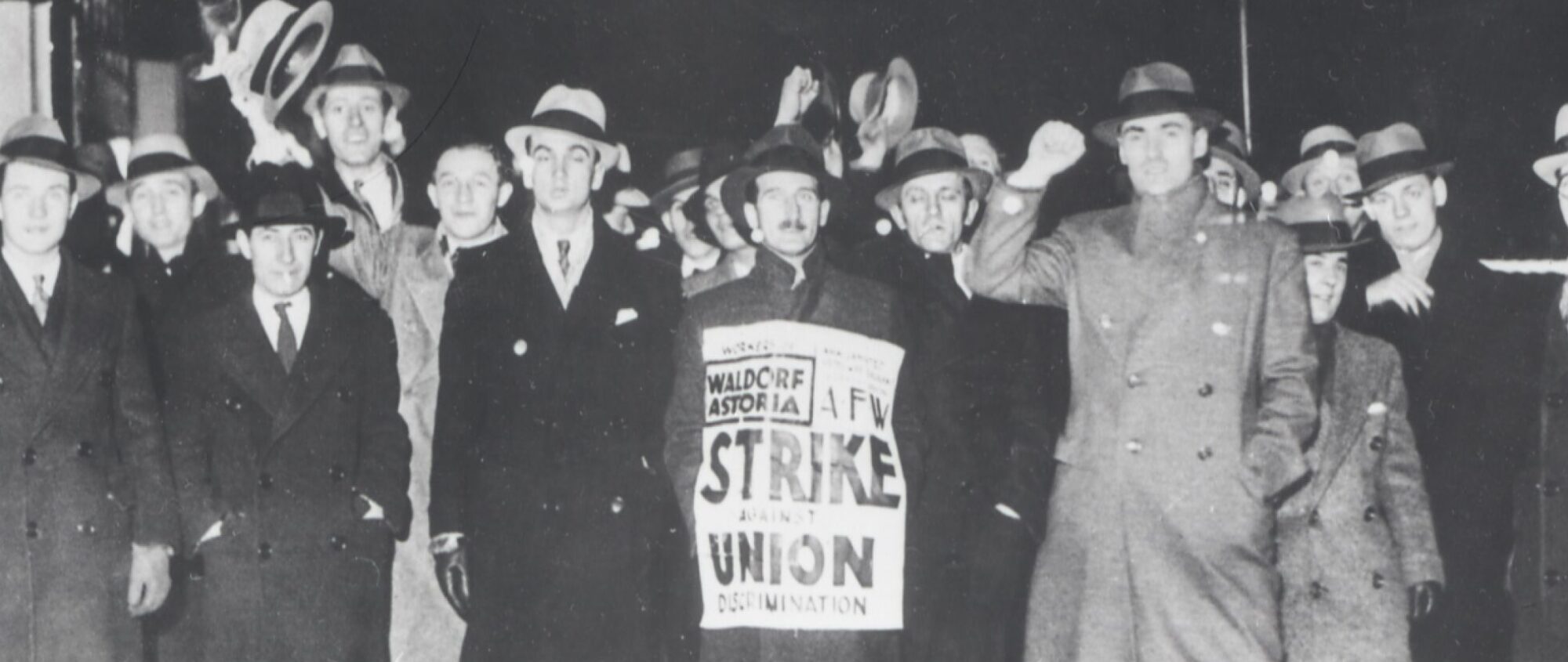
There is no public word on what comes next for the Carlton House. The building began life as the Hilton JFK in the 1970’s. It turned out that people don’t want to pay for a luxury hotel room so near the roaring jets of an international airport, and so the hotel was re-christened a Best Western. The steady decline in business continued unabated, until its owners announced plans to cease operations in early 2002. The Carlton House holds a special place in my heart because the Hotel Employees union was planning to strike it (and a sister hotel) when I joined the staff. It was my first almost strike. At one point, we were going to physically occupy the building to prevent its closing. “Are you ready to get arrested?,” my boss asked me as she cackled with delight at the thought of being dragged out of there herself. Of course, I was, but it was unnecessary. The company settled, and gave the laid-off workers a massive severance package (not unlike the recent Plaza settlement).
Every time I’ve driven past the building, I remember the excitement of that fight, but also the sadness of all those lost jobs and dashed hopes. The construction of a luxury Hilton hotel in southwest Queens was the product of overly ambitious development plans, not unlike the Olympic dreams for Long Island City, or Ratner’s stadium-city of towers. The depressing site of this run-down and near-vacant hotel should serve as a warning to think twice and have a contingency plan before building more towers out yonder.
THe Carlton House should remain a homeless shelter. There is still a pressing need for such long-term housing for our city’s homeless families, and it makes the symbolism of the Homeless Hilton that much more potent. The big building plans at LIC, Atlantic Avenue, Williamsburg and elsewhere must include more affordable housing now, less those towers be relegated to homeless shelters years from now.
Board of Education Layeth the Smacketh Down
Although they were generally good guys, I don’t recall my high school history teachers making a big impression on me. Of course, they couldn’t piledrive me into my desk. My old high school, Benjamin N. Cardozo, apparently corrected that shortcoming by hiring professional wrestler Matthew Kaye (a.k.a. Matt Striker, Matt Martel, Hydro, or Hot Stuff) to teach European history.

Unfortunately, he has resigned after getting caught wrestling in Japan while calling in sick. After copping to the “mistake,” he’s offering to pay back the days and is hoping to get another job in city schools, which an investigator has recommended against.
“I would have been better off beating a kid, because those teachers always seem to keep their jobs,” Kaye told the Daily News. (Those teachers, I would venture, don’t document their malfeasance on the web). I don’t think the Board of Education should give up on hiring professional wrestlers. Next time, I recommend hiring Dr. Cube for the Science department. He has a PhD…in Evil.