Another Terrifying Labor Statistic

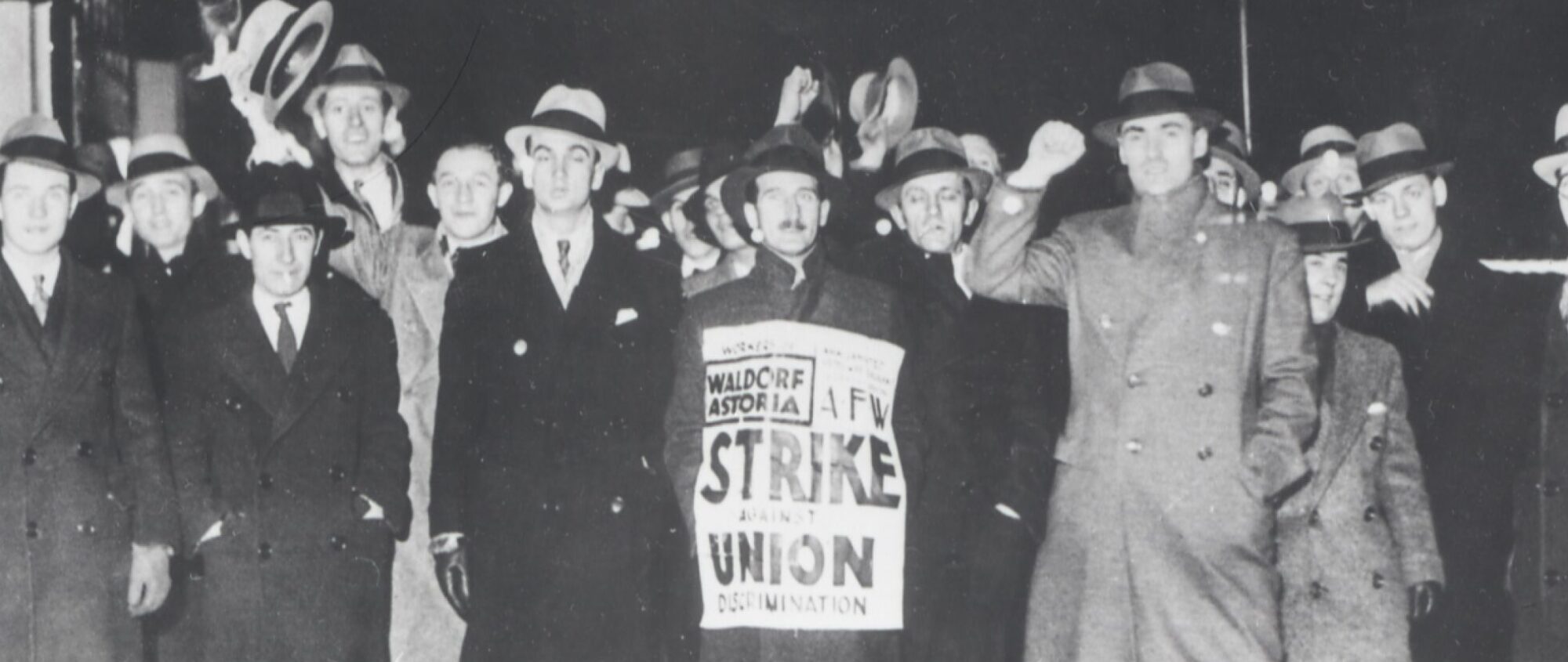
The Center for Economic and Policy Research has released a report that finds that one in five union activists can expect to be fired during an organizing campaign under George Bush’s watch. Overall, a pro-union worker had a 1.4 percent chance of being illegally fired for his sympathies in 2005. An organizer’s gut reaction to authors John Schmitt and Ben Zipperer’s paper might well be, “Oh, great, just what my organizing committee needs to hear!” The fact is that workers already know that organizing is risky (and organizers don’t suger-coat the risk).

Combined with threatened and actual plant closures, terminations and employer animus are the greatest reasons why half of all union representation elections lose and so many more campaigns never even come to election as activists are fired as a chilling example to their coworkers not to step out of line. The report’s numbers are based on cases where the National Labor Relations Board found a termination to be illegally motivated by anti-union animus and ordered that the employee be reinstated with back pay. This remedy is hardly punitive, since the boss is not fined or jailed for willfully violating the law, and, indeed, the back-pay that he must make up are the wages he would have paid anyway minus any other wages that the employee earned from other employers in the meantime, which at an average of $2,749 per fired worker is a huge discount if the firing successfully discourages the rest of the workers from pursuing their organizing campaign.

The authors utilize NLRB data for their report, which ignores a world of activity beyond an increasingly archaic and anti-union process. Public sector employees, who are governed by state laws, are far less likely to face termination for their union activism, a fact that Kate Bronfenbrenner and Tom Juravitch cited in an earlier paper as a reason for the higher win percentage for unions in public versus private sector campaigns. And many innovative unions are bypassing the NLRB election procedure for pressure campaigns leading to card check recognition. Union activists are probably less likely to be terminated during such a campaign, but it’s impossible to gather numbers. Instead, the authors estimate the number of workers organized through such procedures and add them to the universe of their study, which produces a very conservative figure for the likelihood of a pro-union worker to be fired.

Schmitt and Zipperer perhaps should have ignored these cases entirely and focused on the NLRB process. What their paper would be then is yet another convincing argument that the National Labor Relations Act is broken; that, on the whole, it serves management’s interests and provides a legal roadmap for a campaign of terror to beat back most union organizing campaigns, and, as such, is in desperate need of reform or repeal.

Labor law reform is on the agenda, with the Democrats newly in control of Congress, although mostly as a wedge issue for the coming presidential contest since Bush is likely to veto anything that the Congress passes on labor (save, perhaps, for a narrow tweaking in response to Kentucky River). The prospect of a Democratic presidency coupled with the Democratic Congress, absent a groundswell of political pressure, should not inspire too much optimism. After all, labor law reform was on the agenda the last time the Democrats controlled Washington (and the situation was, in some ways, worse – a worker was more likely to be fired for union activity during the Reagan years), but two years of studies and commissions produced nothing.

A Press More Bumbling Than the Dead Prez

If Gerald Ford was trying to live down his image as a bumbler, he made a curious choice of dying right after Christmas when most of the half-way decent reporters must be on vacation. On a good day, the New York Times annoys the crap out of me, but a couple of doozies slipped in that have really driven me nuts.

In a television column that itself comments on how substitutes are reporting the news of Ford’s death, reporter Alessandra Stanley notes:

On “Today” the NBC correspondent Andrea Mitchell mentioned that she last spoke to Mr. Ford in California last February, “when he came over to see me, and we had lunch.” (It is hard to imagine a former president in his 90s going out of his way to meet a television reporter, so it was hard not to suspect that Mr. Ford was going out of his way not to invite Ms. Mitchell over to his house.)

How clever? What a fucking idiot! Either she doesn’t know that Andrea Mitchell is married to the then-Fed Chair Alan Greenspan, or else she was intentionally obscuring how cozy journalists and official Washington can get. Either way, it’s outrageous.

More outrageous is Sam Roberts’ attempt to exonerate Ford for his role in New York City’s fiscal crisis. Yes, it’s technically true that, just as Marie Antoinette never said “Let them eat cake,” Ford never told New York to “Drop Dead,” but their actions and policies made clear the contempt that was summed up in the better copy that the journalists of their day (far better than this sorry lot) screamed in headlines. His defenders may insist that he “liked New York,” but insisting that the city raise the subway fare (part of the completely separate and solvent MTA budget), raise CUNY tuition, end rent control and hack away at public hospitals, museums and social services showed real – I’ll say it again – contempt for what New York stood for politically and for its heroic effort to be more than a playground for the rich and famous.

Roberts finds a number of people to praise Ford’s neoliberal hatchet job, mostly the politicians who subsequently turned New York into a playground for the rich and famous, but makes no attempt for balance. There is no questioning the wisdom of drastic cuts in public spending, nor the dubious “fact” that the crisis was the product of “inevitable hemorrhaging inflicted by bankrupt liberalism” (rather than a conspiracy of a handful of big banks that encouraged the city’s debt and then without warning demanded their money back).

The only voice of dissent slips in, almost by accident, from 30 years ago in DC37 chief Victor Gotbaum’s witty complaint that the Ford administration aimed to shrink government down to just police and fire protection, “and he’s not sure about fire.”

What the Hell Happened to James Brown?

David McReynolds laments the now-obvious gap in his record collection, and asks where is a good place to start with James Brown. And, since he also laments the lack of consideration of arts and culture in our little corner of the the movement, and I need an excuse to get my nose out of health care policy textbooks, I’m wrtiting to recommend “JB40.”

Ordinarily, I agree with that old “Kids in the Hall” joke that “Greatest hits are for housewives and little girls,” but Brown’s career is so expansive and encompasses so many distinct periods that no regular album could serve as a proper introduction. In fact, I just had this conversation with Alan Amalgamated last Friday, and if I were superstitious I would think that I cursed James Brown to die two days later. I’m a “jinxy motherfucker,” Alan says.

To avoid the crap that passes for radio, Alan and I make mixtapes for each other on our carpools out to lawnguyland. My inclusion of “Say It Loud” (yes, I may be as pale as a corpse, but that song is awesome and I do sing along, “I’m Black and I’m proud.”) inspired Alan to posit that the two most influential drummers of the modern era were John Bonham and the guy that drummed for James Brown. He’s the drummer, so he’s qualified to speak about Bonham (I find Zeppelin too wonky and boring), but the sad truth is that the unnamed, unknown drummer for James Brown, whose work is sampled in so many hip hop songs, was at least two different guys. Brown rather famously fired his crack soul band in the late 1960’s for striking for better treatment from their bandleader.

The tight, tight, tight band of “Papa’s Got a Brand New Bag,” “Night Train” and “I Got You (I Feel Good)” were conditioned by the stern Godfather of Soul’s fining them for any missed beat or bum note. When they demanded that this practice stop, they were summarily fired by JB. His cocky young bassist, Bootsie Collins, promised to put together a new band for his bandleader. The result was a looser, funkier sound. By simply changing bands, James Brown invented a new genre of music: funk. He is a towering influence over popular music, and (this is how I “cursed” him) I wondered on Friday, “What the hell happened to James Brown?”

This man invented new genres on the fly. He famously rented out the Apollo and other venues for weeks at a time, hired his own staff and promotors and sold his own tickets in order to prevent his art and business from being exploited. He appealed for calm after Martin Luther King’s assassination. He sang chillingly about the destruction that “King Heroin” wrought in the ghettoes. One day folks were “colored,” then he put out the record “Say It Loud” and suddenly folks were Black and Proud. How did he allow himself to become a walking punchline in his later years? The drug addiction. The mugshots, police chases and jail time. The spouse abuse. “Living in America.”

Perhaps now that he has mercifully passed on, younger generations can finally embrace what was cool, proud and noble about him, much as Johnny Cash and Ray Charles experienced career resurgence in death (but please spare us the Hollywood movie).

It turns out that “JB40” is out of print. I’m sure there will soon be dozens of collections, anthologies and rehashes put out to capitalize on Brown’s death. Some may be good, some will certainly be cheap and poorly chosen. Do yourself a favor and look in the used racks for a copy of “JB40” if you want a satisfying overview of James Brown’s entire, fascinating career.

The Land Where It’s Never Christmas

The Guardian of London has a heart-warming seasonal story about a small town called North Pole in Alaska, where it’s Christmas 365 days a year and all the town’s residents (including the school children) answer “letters to Santa” that come in from around the world. Last spring, a group of about a dozen of North Pole’s sixth graders were caught “making a list and checking it twice.” Their Columbine-style massacre plot was narrowly thwarted. Perhaps the incessant holiday “cheer” drove them to it, writer Jon Ronson wonders?

I was thinking about North Pole while doing some grocery shopping this morning in Kew Gardens, the Land Where It’s Never Christmas. All the shops are open as normal. Perhaps they’ll close an hour early for the big day in deference to the rest of society. There are no Santas around, the streetlights are plain and unadorned and almost no houses are decorated. It’s bliss. This is a less-advertised perk of living in a majority Jewish neighborhood (and, being Queens, those who aren’t Jewish are Hindu, Sikh, Taoist, Buddhist and Stewardess). Sure, it’s hell to find parking on a Friday night, but you won’t be driven bonkers by the whole “X-Mas Atmos.”

Serving on my co-op’s board, it has come to my attention that my apartment has probably doubled in value in the last three years. If we promote this whole “No Christmas” thing the way that North Pole promotes its “Year-round Christmas” thing, we could probably redouble our home values with all the Scrooges beating a path to our doors. But if I ever do sell, someone please remind me of this post. Just start singing “Jingle Bells,” and my Pavlovian response will kick in: “Never leave Kew Gardens.”