Review of Daniel J. Clark’s “Listening to Workers” for IRSH

Common to failing and fallen empires is a nostalgia for a golden age that never existed. Americans like to believe that we miss working on assembly lines in auto factories.

The fantasy that “good jobs” are inherently and automatically generated by factories, or even that unionization magically converts working on an assembly line into the kind of job that workers would want their children to aspire to, motivates much of Donald Trump’s trade war. Likewise, the mixture of domestic tax incentives and narrowly tailored tariffs that comprised his Democratic predecessor Joe Biden’s “Build Back Better”, aimed to “create good jobs that give working families and the middle class a fair shot and the chance to get ahead”. Biden frequently waxed nostalgic about his 1950s’ childhood in Scranton, PA, and a work ethic instilled by his dad: “A job is a lot more than a paycheck. It’s about your dignity. It’s about your place in the community”.

Continue reading “Review of Daniel J. Clark’s “Listening to Workers” for IRSH”

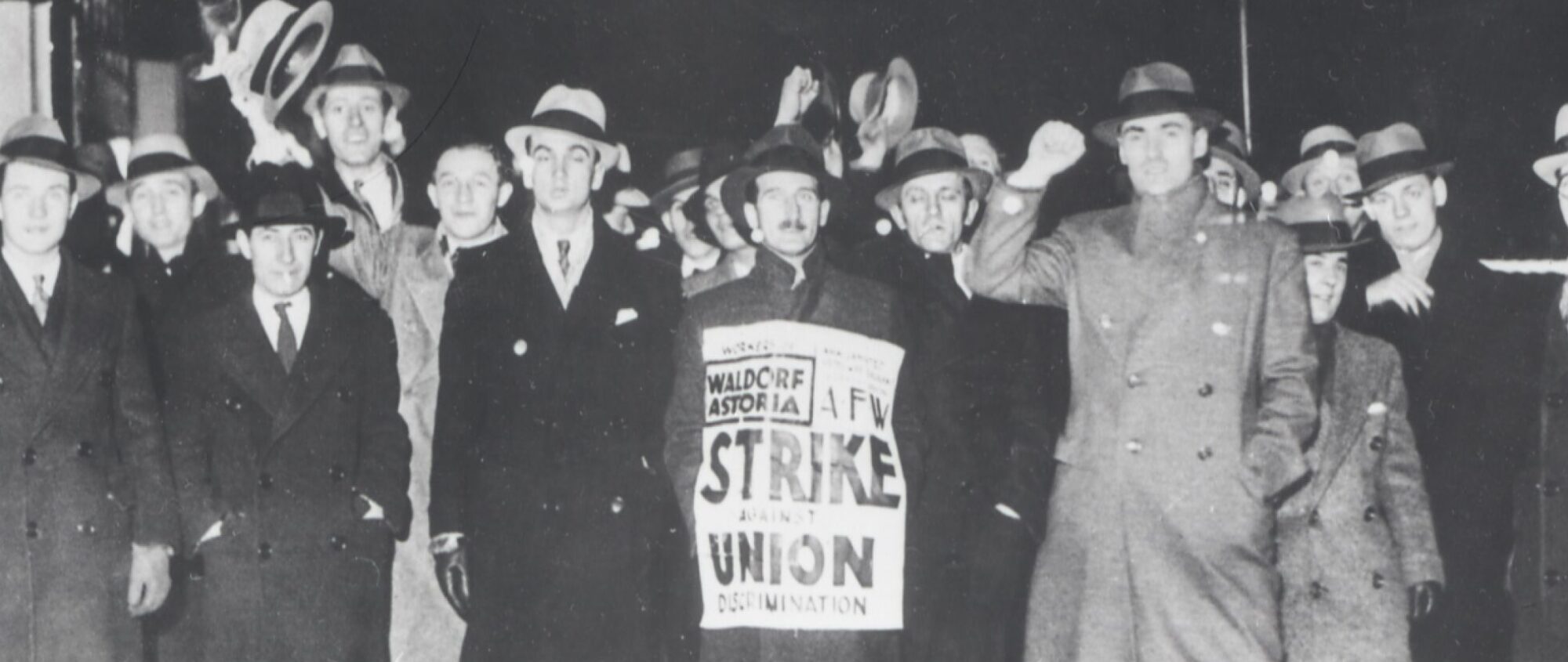
The War on Communists in the Hotel Workers’ Union

The Hotel Employees and Restaurant Employees and Bartenders International Union (HERE) gathered in Milwaukee in 1947 for its largest convention in history. With over 400,000 members, HERE was the fifth-largest affiliate of the American Federation of Labor — and growing. But a majority of delegates arrived in a less-than-celebratory mood, seeking to ban the Communists who had been so central to the union’s successes from the organization altogether.

Before the vote on a constitutional anti-communist clause, newly elected HERE president Hugo Ernst spoke against the “drastic” motion. He praised “the officers of Local 6 for the splendid work they have done in the hotels in New York, which we tried unsuccessfully to organize a good many years ago.” He attributed their success not to their being Communists (“probably in spite of that”) and lamented that had they refrained “from using their official position for other than trade union principles, probably we would not be confronted with this issue that is before us now.” Dedicating union staff and funds to Communist Party (CP) front activities far afield from contract enforcement was the most salient complaint that opponents had been lodging.

But the proposed amendment was carried amid boos while a number of delegates paraded around the convention hall waving American flags and singing “God Bless America.” Communist influence in the American Federation of Labor (AFL)’s Hotel & Restaurant Employees, though, didn’t end with a purge like it would in the Congress of Industrial Organizations (CIO) a year later.

In the end, the split was more of a family feud that kept a faction of former party influentials in power, continuing to lead a progressive union that fought for civil rights, socialized medicine, and good union contracts for decades to follow. Today with a growing socialist movement committed to a “rank-and-file” union strategy, New York’s hotel workers provide a lesson in how to gain — and lose — socialist influence within the labor movement. Continue reading “The War on Communists in the Hotel Workers’ Union”